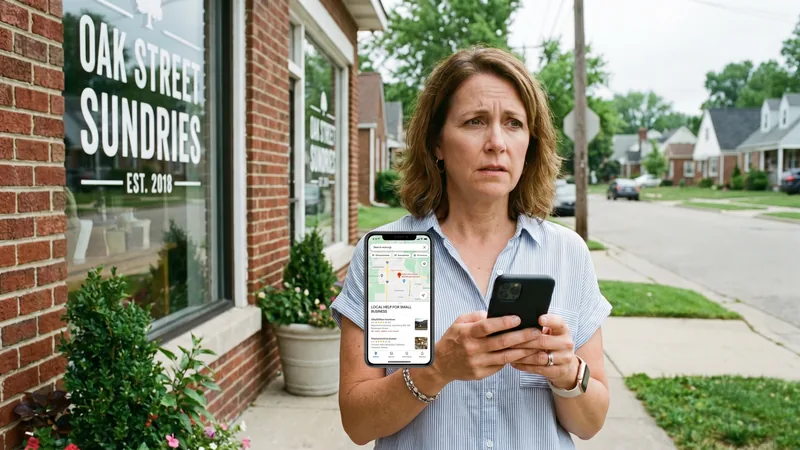
When you search "PPC consultant near me," you're probably picturing someone local: someone you can meet with in person, who understands your local market, who feels reachable in a way a stranger three time zones away doesn't. It's an understandable instinct. It's also, for PPC specifically, largely outdated. The best consultant for your business is statistically far more likely to be somewhere else entirely, and working with a remote specialist routinely outperforms hiring locally. Here's why.
The Old Assumption: Why Local Used to Matter
There was a real era where hiring locally made practical sense: you needed someone you could meet with face-to-face, build trust with in person, and coordinate with easily because remote collaboration tools simply didn't exist yet. That constraint shaped hiring habits for decades, and the instinct has outlasted the reason behind it.
What Actually Changed
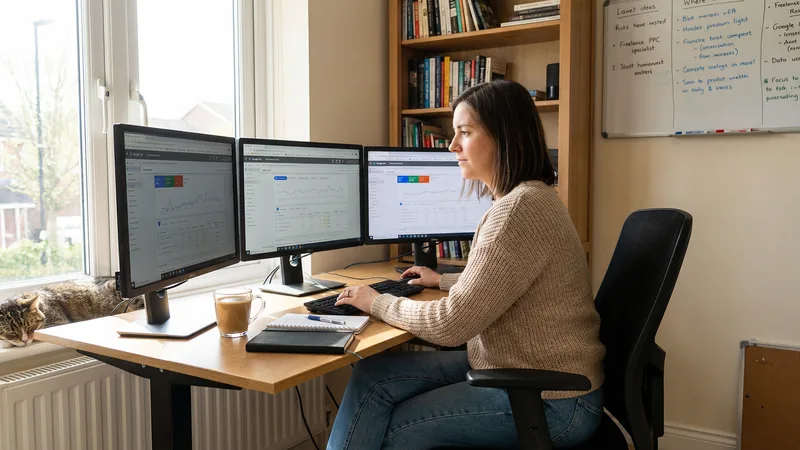
PPC work happens almost entirely inside ad platform dashboards: Google Ads, Meta Ads Manager, LinkedIn Campaign Manager. None of it requires physical presence. What used to require in-person coordination now happens through video calls, shared Loom walkthroughs, live dashboards, and instant messaging: tools that make remote collaboration not just possible, but frequently smoother than the scheduling friction of in-person meetings.
The Real Advantages of a Remote-First Consultant
- Access to a dramatically larger talent pool. Restricting your search to your city eliminates the vast majority of genuinely qualified specialists, including many with deep experience in your exact vertical.
- Timezone leverage, not disadvantage. A consultant working while you sleep can review overnight performance and have optimizations ready before your morning starts.
- Specialization over generalism. A niche specialist three states away who deeply understands your industry beats a local generalist who's never touched your vertical before.
- Lower overhead, often lower fees. Remote consultants aren't paying for a downtown office lease that gets baked into their rates.
See our companion piece on how to find and vet a PPC consultant for the practical side of running this search, whether local or remote.
The Rare Cases Where Local Still Helps
To be fair, there are a small number of genuine exceptions: if your business requires the consultant to attend in-person events, trade shows, or physical location shoots as part of the engagement, or if you're managing highly localized offline media buys (radio, local print) alongside PPC, in-person familiarity with your specific local market can add marginal value. For the vast majority of PPC engagements, though, none of this applies.
Tools That Make Remote PPC Collaboration Seamless
The practical infrastructure for remote PPC management is mature and unremarkable at this point: video calls for strategy discussions and onboarding, Loom or similar tools for async walkthroughs of account changes and reasoning, shared dashboards (Looker Studio or similar) so you can check performance anytime without waiting for a scheduled report, and simple project management tools for tracking open items and requests between calls. None of this requires the consultant to be in your timezone, let alone your city: and in most cases, it produces more documentation and transparency than a purely in-person relationship would, since async video and written updates naturally create a record that a verbal in-person conversation doesn't.
Common Objections to Remote Hiring, Addressed
- "I won't be able to reach them quickly." A well-run remote relationship includes clear response-time expectations set upfront, often faster than waiting for an in-person meeting to be scheduled.
- "They won't understand my local customers." Local market research, competitor analysis, and Google Trends data are available to any consultant regardless of location: understanding your customers comes from asking good questions and reviewing your data, not from living nearby.
- "It'll be harder to build trust." Trust comes from transparency, consistent communication, and demonstrated results: all of which are fully achievable remotely, and arguably easier to verify through written reports and recorded calls than a handshake relationship.
- "What if something goes wrong and I need someone in person?" In the rare event of a serious dispute, remote engagements are still governed by the same contracts, invoices, and account access controls as local ones: physical proximity doesn't meaningfully change your recourse.
How to Vet a Remote Consultant With Confidence
Remote hiring just means shifting your due diligence to different signals: video calls instead of office visits to gauge communication style, requesting screen-share walkthroughs of their actual work in past accounts, checking reviews and references thoroughly since you can't rely on local reputation, and starting with a smaller trial project or paid audit before committing to a long-term retainer. Our how to choose a PPC consultant guide and PPC consultant cost guide cover the rest of the vetting and pricing process in detail, none of which changes meaningfully whether the consultant is local or remote.
What the Data Says About Remote Work Trends
The broader shift toward remote and hybrid knowledge work over the past several years has normalized exactly the kind of arrangement a remote PPC consultant represents. Marketing and creative services specifically have been among the professions most compatible with fully remote delivery, since the deliverables (campaigns, reports, strategy) are entirely digital and require no physical handoff. This isn't a temporary artifact of any particular period, it reflects a structural shift in how digital-native services get delivered, and hiring managers across marketing, software, and consulting have increasingly stopped treating candidate location as a meaningful filter for roles that don't require physical presence. PPC management fits squarely in that category: the deliverable is a well-run ad account and clear reporting, both of which travel perfectly well over the internet.
A Practical Illustration From Managing Remote Accounts
After 14 years managing PPC accounts across industries, a meaningful share of my longest-running client relationships have been entirely remote from day one: some with clients I've never met in person, spanning multiple continents and time zones. What's made those relationships work has consistently been the same handful of things: a clear, agreed communication cadence set at the start rather than figured out ad hoc, prompt responses within an agreed window rather than an assumption of instant availability, and dashboards and reports the client could check independently rather than relying entirely on scheduled updates. None of that required being in the same city, or even the same country. What it required was discipline about communication: which, frankly, some local consultants lack just as often as remote ones. Location was never the variable that determined whether the relationship worked.
Turning Timezone Differences Into a Deliberate Strategy
Rather than treating a timezone gap as a hurdle to manage around, some of the most productive remote arrangements actively use it. A consultant working several hours ahead of a client can review overnight performance data, make adjustments to bids or budgets, and have a summary of changes and reasoning ready before the client's workday even starts: effectively extending the working day on the account without either party working unusual hours locally. This is particularly valuable for accounts with fast-moving auction dynamics or time-sensitive budget pacing, where a delay of even half a day in reacting to a shift can be costly. Framed this way, timezone difference stops being a communication obstacle to work around and becomes a genuine operational advantage: coverage on your account effectively extends beyond your own business hours.
Setting Up a Remote Engagement for Success From Day One
A few practical steps make a remote engagement start smoothly regardless of distance: agree explicitly on primary communication channels and expected response windows before work begins, set up shared access to reporting dashboards immediately rather than relying solely on emailed updates, schedule a recurring video call at a time that reasonably works for both timezones, and clarify escalation paths for anything urgent outside the normal cadence. None of this is meaningfully different from what a well-run local engagement should also have in place, it simply becomes non-negotiable rather than assumed once the relationship is remote by design.
Cultural and Language Fit Matter More Than Geography
What actually deserves scrutiny in a remote hire isn't their city, but genuine cultural and language fit for working with your team and, if relevant, your customers. A consultant who writes ad copy needs strong command of the language your customers speak and search in, and a consultant collaborating closely with your internal team benefits from working-style compatibility: responsiveness, directness, and communication norms that mesh reasonably well with how your business operates. These factors can vary meaningfully between individual consultants regardless of where they're based, and are worth assessing directly during the interview process rather than assumed based on a consultant's location or nationality.
The Irony of Searching "Near Me" on Google Itself
There's a fitting irony worth naming: the "near me" search behavior itself is a PPC and local SEO phenomenon that specialists study and optimize for constantly on behalf of clients: plumbers, dentists, contractors: precisely because physical proximity genuinely matters for those services. PPC consulting is fundamentally different from a plumber or dentist visit; nobody needs their PPC consultant to physically show up at a location. Recognizing that the "near me" instinct is a well-trained search habit from an entirely different category of local service, rather than a meaningful signal for a digital, platform-based service like PPC management, is really the core insight this entire discussion boils down to.
What Clients Who've Made the Switch Actually Report
Anecdotally, businesses that switch from a local-only search to a remote-inclusive one most often report two things afterward: relief that a specific worry (usually communication lag or cultural mismatch) simply didn't materialize the way they expected, and mild frustration that they hadn't widened the search sooner given how much stronger the eventual remote candidate turned out to be compared to their local shortlist. This isn't universal, some businesses do have genuine reasons favoring local hires, but it's a common enough pattern that it's worth treating the "local is safer" assumption as something to test against your own vetting process rather than accept automatically.
At the end of the day, the question worth asking isn't "is this consultant near me," but "is this the right consultant for my business". And increasingly, the honest answer to that second question has nothing to do with a map.