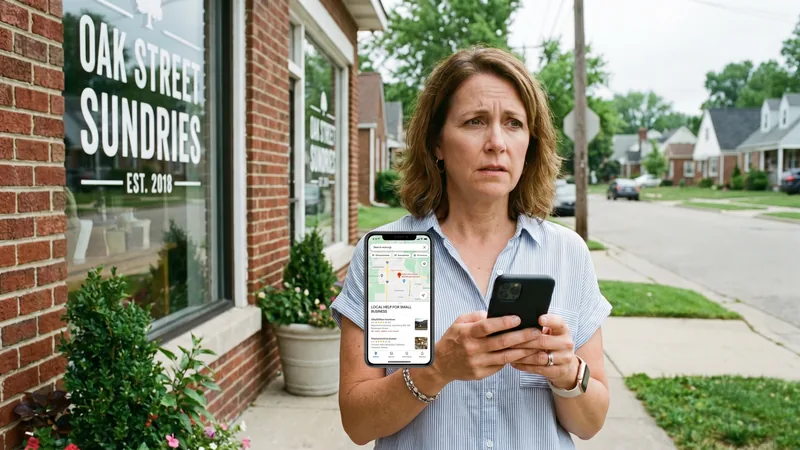
If you're typing "PPC consultant near me" into a search bar, you're probably assuming that proximity matters: that a local expert will understand your market better, be easier to meet with, and be more accountable. Some of that intuition is fair. But it's worth separating what proximity actually buys you from what it doesn't, so you can build a vetting process that finds the right expert whether they're across town or across the country.
Why You're Searching "Near Me" in the First Place
Most "near me" searches come down to a handful of underlying concerns: wanting someone who understands local market conditions, wanting the option of an in-person meeting, and wanting a level of trust that feels easier to establish face-to-face. All reasonable. The question is whether hiring locally is actually the best way to satisfy those concerns, or just the most familiar one.
Local vs. Remote: What Actually Matters
| Factor | Local Advantage? | Reality |
|---|---|---|
| Understanding your local market | Sometimes | Market data, competitor research, and Google Trends work the same regardless of the consultant's zip code |
| In-person meetings | Yes, if you value them | Most PPC work happens inside ad platform dashboards, not in a conference room |
| Talent pool size | No - local limits you | Remote hiring gives access to specialists with deeper vertical experience |
| Communication quality | No inherent advantage | Video calls, Loom recordings, and shared dashboards close this gap almost entirely |
For a deeper dive into why proximity has become largely irrelevant for PPC specifically, see our companion piece on why location doesn't matter anymore.
Where to Actually Find Qualified Candidates
- Google Partner directory, filters by Google Ads certification and agency size, though certification alone doesn't guarantee skill.
- Referrals from your network, ask other business owners in adjacent (non-competing) industries who they use.
- LinkedIn - search "PPC consultant" plus your industry; look for consultants who post genuine case studies, not just generic tips.
- Industry-specific communities: Slack groups, subreddits, or trade associations often have vetted recommendations.
The Vetting Checklist: Questions & Red Flags
Whether local or remote, ask every candidate the same core questions so you can compare answers fairly:
- Can you show me a case study from a business similar to mine, with real numbers?
- Who will actually be managing my account day-to-day - you, or someone junior on your team?
- What does your reporting look like, and how often do we talk?
- How do you handle underperformance - what's your process for diagnosing and fixing it?
Running a Structured Interview Process
Treat this like hiring a key employee, not booking a vendor. Talk to at least three candidates, ask the identical set of questions, and score their answers against a simple rubric: relevant experience, communication clarity, transparency about limitations, and pricing structure. See our full guide on how to choose a PPC consultant for a more detailed scoring framework, and what a PPC consultant actually does if you're not yet sure what deliverables to expect.
If cost is a major factor in your decision, our PPC consultant cost guide gives realistic 2026 pricing benchmarks to compare quotes against.
Red Flags Specific to Local Hiring
Restricting your search to a local radius introduces its own specific risks worth watching for. A small local market may only have a handful of PPC providers, which can mean less competitive pricing and less pressure for them to demonstrate real results, since word-of-mouth and local reputation alone can sustain their business. Watch for consultants whose entire pitch centers on being "local and easy to meet" rather than on results, process, or expertise: that framing is sometimes a substitute for a weaker track record. Also be cautious of local generalist agencies that bundle PPC alongside web design, SEO, and social media as one of many services; ask specifically how much of their revenue and staff time is dedicated to paid search versus other services.
What to Do If Your Local Search Comes Up Short
If you've genuinely searched locally and haven't found anyone who passes the vetting checklist above, that's a normal outcome, not a dead end: it simply means it's time to widen the search to remote candidates. Most of the vetting process above works identically for remote consultants, with one addition: run your interview process over video call rather than in person, and weight communication clarity and responsiveness during that call even more heavily, since it's your best proxy for what ongoing remote collaboration will feel like. Many businesses that start this search assuming they need someone local end up hiring remotely simply because the candidate pool was deeper and the vetting revealed a better fit.
A Sample Interview Script You Can Reuse
Having an actual script, not just a topic list - keeps the conversation consistent across candidates. A workable structure: start with "Tell me about the last account you managed that looked similar to mine, what did you inherit, and what did you change?" (reveals real diagnostic experience); follow with "Walk me through exactly what happens in my first 30 days if I hire you" (reveals process maturity); then "What's a mistake you made on an account, and how did you catch it?" (reveals honesty and self-awareness); and close with "How do you decide when to escalate a concern to me versus just handling it?" (reveals communication judgment). Score each answer 1-5 for specificity and relevance to your business, and total the scores across candidates at the end rather than relying on overall gut feel.
How Much Weight to Give Online Reviews
Google reviews and testimonials are a useful data point, but they're a weaker signal for PPC specifically than for, say, a local restaurant or contractor. Reviews tend to reflect communication style and general satisfaction more than actual campaign performance, since most clients leaving a review aren't equipped to independently verify whether their account was well-optimized. Use reviews as a screening filter to build your initial shortlist, but treat the structured interview and requested case studies as the real decision-making evidence: a consultant with modest review volume but a strong, verifiable case study should outrank one with many five-star reviews but no willingness to show real numbers.
Consider Starting With a Paid Pilot Project
If you're genuinely torn between two or three strong candidates after the interview process, consider proposing a small, paid pilot rather than committing straight to a long-term retainer. A one-time paid audit, or a 30-day trial managing a single campaign, gives you real evidence of how a candidate actually works: their communication pace, the quality of their recommendations, and whether their stated process matches their actual behavior: before you commit to a broader engagement. Most reputable consultants, local or remote, are open to this structure, and a candidate who refuses any form of smaller trial engagement and insists on a long commitment upfront is worth treating with extra scrutiny. The modest cost of a pilot is cheap insurance against months of a mismatched full engagement.
Adjusting Your Search for Niche Industries
If your business operates in a genuinely niche or regulated industry: healthcare, legal, financial services, or a specialized B2B category: your search criteria should shift accordingly. In these cases, industry-specific experience matters more than geographic proximity or even general PPC skill, since compliance requirements, buyer behavior, and typical CPC economics differ significantly from a generic local service business. A consultant with five years of general PPC experience but zero healthcare advertising experience will likely need a steep learning curve on HIPAA-adjacent landing page requirements and Google's healthcare ad policies, time and risk you're effectively paying for during onboarding. For niche verticals, prioritize candidates who can point to direct experience in your specific category over ones who are simply closest to your office or have the broadest general portfolio.
When to Walk Away From the Search Entirely
Occasionally, after a genuine search, the right conclusion is that outside help isn't yet justified: not every business needs a consultant right now. If your ad spend is minimal, if you have the bandwidth and interest to learn the platform yourself, or if every candidate you've vetted feels like a mismatch on price or fit, it's entirely reasonable to pause the search, run campaigns yourself using platform-provided guidance for a few months, and revisit hiring once you have a clearer sense of your own goals and a track record to compare candidates against. Hiring the wrong consultant under search fatigue is worse than not hiring one yet.
A Hybrid Approach: Local Relationship, Remote Execution
Some businesses land on a middle path: hiring a remote specialist for the actual campaign management and optimization, while maintaining a separate local relationship (an agency, a marketing coordinator, or an internal hire) for anything genuinely requiring physical presence, like event coordination or in-person creative shoots. This isn't the right fit for every business, but it's worth considering if your instinct toward "local" is really about a few specific physical-presence needs rather than the PPC management itself: separating those two needs often reveals that only a small fraction of the relationship actually benefits from proximity.
Using a Short Video Call to Shortlist Before Committing Time
Before investing in a full structured interview with every candidate on your list, a 15-minute introductory video call can efficiently filter out clear mismatches. Use this short call to gauge basic communication clarity, confirm they have relevant experience at all in your general industry, and get a rough sense of pricing expectations: saving the deeper structured interview (with the full scorecard and case study requests) for the two or three candidates who pass this initial filter. This two-stage approach respects both your time and the candidates', and tends to produce a stronger final shortlist than trying to run the full deep-dive process with every single lead from your initial search.
Setting a Decision Deadline for Yourself
Open-ended searches have a way of dragging on for months, with "just one more candidate" perpetually pushing back a decision that's costing you money in wasted or under-optimized ad spend every week it's delayed. Set a firm deadline for your search, typically 2-3 weeks is enough time to identify and interview a reasonable shortlist without dragging on indefinitely, and commit to choosing the best available candidate from that window rather than continuing to search for a hypothetically perfect one. A good-enough consultant hired promptly usually outperforms a perfect consultant found six months from now, purely because of the compounding cost of continued delay.
One last practical note: whatever you decide, document the reasons behind your choice: why this candidate, at this price, with this scope: even briefly. It becomes a useful reference point three or six months in when evaluating whether the relationship is delivering on what you originally expected.