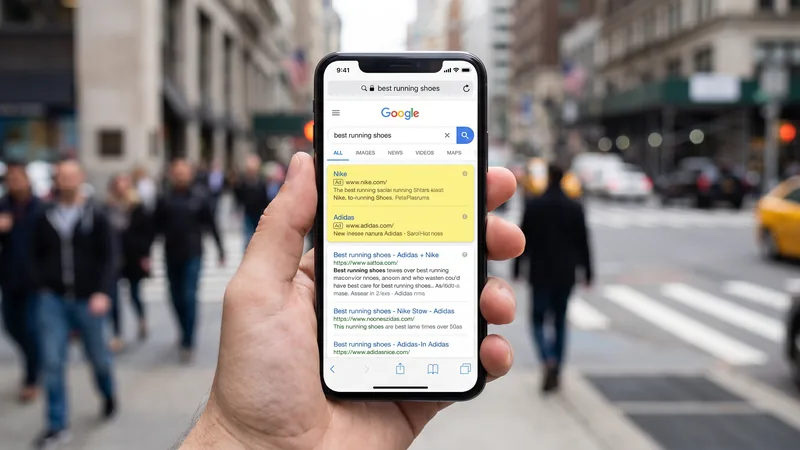
Every vendor pitch I've sat through in the last two years has an AI slide in it somewhere. Half of them are describing something genuinely useful: Smart Bidding, generative ad copy, predictive lead scoring. The other half are relabeling a rules-based script as "AI-powered" because it tests better in a sales deck. After 14 years running paid media accounts, my job now includes a second, less glamorous task: figuring out which is which before a client's budget pays for the difference.
This guide is not another "AI will change everything" piece. It's a practical breakdown of where AI already earns its place in a lead generation program, where it's still unreliable, and how to use it without handing over judgment calls that should stay with a human.
I'll be direct about my bias here: I've watched automation genuinely transform accounts that were previously bottlenecked by manual bid management, and I've also watched it quietly waste six figures of client budget because nobody was checking what it was actually optimizing toward. Both things are true at once, and the rest of this guide is an attempt to hold both realities without collapsing into either "AI changes everything" or "AI is all hype."
AI in Lead Gen: Hype vs. Reality
The gap between marketing copy and actual capability is wide right now. Vendors describe "AI-powered lead scoring" that's really a weighted spreadsheet formula, or "AI campaign optimization" that's Google's own Smart Bidding wrapped in a different dashboard. None of that is dishonest exactly, it's just imprecise language doing a lot of selling.
What's real: machine learning models trained on enormous conversion datasets genuinely outperform manual bid management for many accounts, particularly at scale. What's overstated: the idea that AI can replace strategic account structure, audience judgment, or knowing which leads are actually worth pursuing. Those still require a human who understands the business behind the account.
Where AI Actually Adds Value
Three areas consistently deliver measurable value in a lead generation context:
- Bid and budget optimization at scale. Smart Bidding strategies process signals: device, location, time of day, audience overlap: far faster and in more combinations than a human managing bids manually ever could.
- Pattern detection in large datasets. Identifying which combinations of keyword, ad, and landing page correlate with high-quality leads across thousands of data points is a genuinely good use of machine learning.
- First-draft creative generation. AI-generated ad copy variations, when reviewed and edited by someone who understands the brand and offer, speed up testing cycles meaningfully.
These three areas also compound each other in practice. Better bid optimization generates more conversion data faster, which improves pattern detection across keywords and audiences, which in turn gives you a clearer picture of what creative angles are actually resonating with the leads that convert. Accounts that treat these as separate, disconnected tools tend to get a fraction of the value of accounts that deliberately let the data from one layer inform decisions in another.
AI-Driven Bidding and Campaign Automation
Google's Smart Bidding strategies: Maximize Conversions, Target CPA, Target ROAS: are the clearest example of AI that's earned its place in most accounts. These strategies use machine learning to set bids at auction time based on signals no human could evaluate manually across thousands of daily auctions.
Performance Max takes this further, automating not just bidding but budget allocation across Search, Display, YouTube, and Shopping inventory from a single campaign. It performs well for accounts with strong first-party conversion data and clean account structure, and poorly for accounts that feed it vague conversion goals or insufficient data volume. See our deeper breakdown of what to hand off versus keep manual in Automation in PPC Management.
The practical rule I use: don't turn on automated bidding until you have enough conversion volume (generally 30+ conversions per campaign in the last 30 days) for the algorithm to learn from, and don't judge a new automated strategy in the first 1-2 weeks: that's the learning period, not the steady state.
Where accounts get this wrong most often is switching strategies too frequently out of impatience. Every time a bidding strategy or target changes meaningfully, the algorithm effectively restarts its learning process, discarding the accumulated pattern-recognition from the prior period. An account that changes its Target CPA every week because the manager is chasing daily fluctuations will almost always underperform an account that sets a reasonable target and lets it stabilize for a few weeks before making an informed adjustment based on real trend data rather than daily noise.
AI for Ad Copy and Creative
Generative AI tools, including Google's own Ad copy suggestions inside Google Ads, can produce a reasonable first draft of responsive search ad headlines and descriptions in seconds. That's a genuine time saver for testing volume. What it doesn't reliably do is capture a specific brand voice, understand nuanced compliance requirements (legal, medical, financial verticals especially), or know which claims are actually true about your business.
My workflow: use AI to generate 15-20 headline variations quickly, then have a human editor cut that down to 8-10 that actually sound like the brand and make defensible claims. Skipping the human pass is how accounts end up with ad copy that reads like every other AI-generated ad in the auction. Technically fine, forgettable in practice.
There's a subtler risk worth naming too: as more advertisers lean on the same generative tools for ad copy, there's a real convergence effect where ads across an entire auction start to sound alike, using similar phrasing and structure because they were all drafted by similar models trained on similar data. Differentiation in ad copy is already hard to achieve within Google's character limits; leaning entirely on AI generation without a distinct brand voice layered on top makes it harder still, right at the moment when standing out in the auction matters more, not less.
AI for Lead Qualification and Scoring
This is where AI intersects most directly with lead generation quality. Predictive lead scoring models, whether built into a CRM like HubSpot or Salesforce, or layered on top via a third-party tool: can identify patterns in past converted leads (source, behavior, firmographic data) and apply that pattern to score new leads in real time.
The value compounds when that scoring data flows back into your ad platform. Feeding Google Ads offline conversion data weighted by lead quality, rather than treating every form fill as equal, lets Smart Bidding optimize toward leads that actually convert to revenue: not just leads that fill out a form. We cover the full mechanics of this in Lead Scoring for PPC Campaigns and CRM Integration with Google Ads.
What AI Still Can't Do Reliably
A few things I've seen AI tools consistently get wrong or oversimplify:
- Understanding true business context. AI doesn't know that your best customers this quarter come from referrals, not paid search, or that a competitor just went out of business and demand is shifting.
- Judging offer-market fit. No algorithm tells you your pricing is wrong or your service area is too broad. That diagnosis still requires a human looking at the whole picture.
- Navigating small data. Machine learning models need volume. Accounts with low conversion counts (common for high-ticket B2B or niche local services) don't have enough signal for automated systems to learn reliably, no matter how the vendor markets it.
- Catching compliance and brand risk. Generative tools will happily write a claim that's untrue or non-compliant if you don't review it first.
Keeping Control: Guardrails That Matter
The accounts that get the most value from AI tools are the ones with clear guardrails, not the ones that hand over full control. A few that consistently matter:
| Guardrail | Why It Matters |
|---|---|
| Conversion action hygiene | Automated systems optimize toward whatever you tell them is a conversion, garbage conversion data means garbage optimization |
| Budget caps on automated campaigns | Prevents runaway spend while Smart Bidding is still learning a new target |
| Regular human review of search terms | Automation doesn't catch every irrelevant query - someone still needs to check |
| Manual approval on generated creative | Catches compliance issues and brand-voice drift before ads go live |
Think of AI tools inside a paid media account the way you'd think of cruise control in a car, genuinely useful for maintaining a steady state on a known road, but you still need a driver paying attention for the turns.
Vendor Red Flags to Watch For
Other signs worth noticing: vague explanations of what the model actually does when you ask a direct question, unwillingness to show you the underlying data the "AI" is trained on, and pricing that scales with ad spend regardless of whether the tool is actually improving results. If a vendor can't explain their model in plain language, that's usually because there isn't much model there. For a broader look at where automation genuinely helps versus where it's oversold, see Automation in PPC Management: What to Automate (And What Not To), and if you're weighing platform changes more broadly, our note on Google Ads Features & Updates for 2026 covers what's actually shipped versus what's still roadmap.
Privacy shifts are also reshaping what data AI models have to work with in the first place, see Privacy Changes & Their Impact on PPC in 2026 for how consent and cookie changes affect the training data behind these tools. For a deeper look at how Google's own automated bidding systems work under the hood, Google's Smart Bidding documentation is worth reading directly rather than taking a reseller's summary of it.
Building a Practical AI Stack for Lead Gen
Rather than adopting AI tools piecemeal because a sales rep called, it helps to think about where in the lead generation funnel automation genuinely earns a place, and to build outward from there deliberately. A stack that holds up well in practice tends to look something like this:
- Bidding layer: Smart Bidding strategies handling auction-time bid decisions, fed by clean, weighted conversion data.
- Creative layer: AI-assisted first drafts for ad copy variations, always passed through human review before going live.
- Qualification layer: A CRM-based or third-party lead scoring model using both explicit and behavioral signals, reviewed and validated quarterly against actual close data.
- Monitoring layer: Lightweight scripts or alerts flagging budget pacing issues, unusual search term patterns, or sudden conversion rate shifts: automation watching the automation, in effect.
Notice that none of these layers replace strategic decisions about account structure, target market, or offer positioning. That's intentional. The businesses I've seen get the most durable value from AI treat it as infrastructure sitting underneath a strategy a human already owns, not as a substitute for building that strategy in the first place. Start with one layer, prove it out with real data, and expand from there: trying to implement all four simultaneously in an account that's never had disciplined conversion tracking usually just multiplies confusion rather than results.