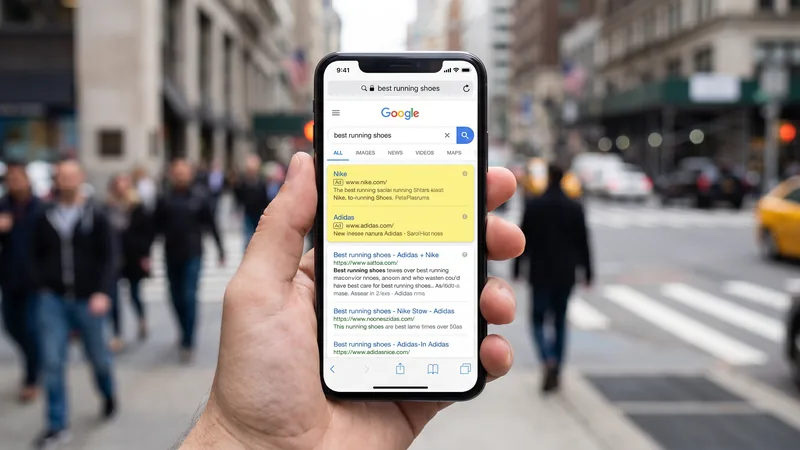
Google Ads doesn't sit still, and 2026 has continued a trend that's been building for a few years now: more automation, more AI-assisted creative and targeting, and a continued push toward first-party data as the reliable foundation for measurement. None of this is optional to engage with, advertisers who ignore these shifts tend to fall behind on efficiency even if their core strategy hasn't changed, simply because the platform's defaults and available tools keep evolving underneath them.
This guide covers the developments I think actually matter for working advertisers, not just headline features, along with what I'd recommend actually changing in a typical account in response. I'm deliberately skipping the smaller cosmetic interface changes Google rolls out constantly, those don't require a strategic response, they're just new places to click for the same underlying actions. What follows are the changes that actually affect how you should be allocating time and budget.
AI-Driven Search Campaign Controls Are Maturing
Google has continued expanding AI-assisted matching and targeting within Search campaigns, building on the broad match and Smart Bidding foundation that's been developing for years. The direction is consistent: less manual keyword-level control, more reliance on the algorithm to interpret intent and match your ads to relevant queries based on signals well beyond the literal keyword text.
For advertisers, this means the controls that actually matter have shifted. Rather than obsessing over match type selection keyword by keyword, the higher-leverage levers now are: the quality and specificity of your ad assets (headlines, descriptions), the strength of your audience signals feeding the algorithm, and your conversion data quality, since the algorithm is only as good as what it's being told to optimize toward.
A useful mental model here: think of yourself less as a keyword-by-keyword bid manager and more as a signal-quality manager. Your job has shifted toward ensuring the algorithm has accurate, complete conversion data, well-differentiated ad assets to test, and clean audience signals to learn from: the actual bidding and matching mechanics are increasingly handled by the platform itself. Advertisers still operating with a pre-automation mental model, manually adjusting individual keyword bids as their primary lever, are optimizing a lever that matters progressively less each year.
Performance Max Controls Are Finally Growing Up
Performance Max launched with legitimate advertiser frustration around lack of visibility and control, a genuinely opaque "black box" campaign type for a lot of early adopters. Google has steadily added more granular reporting and controls since then: better channel-level performance visibility, brand exclusion controls, and more detailed asset-level reporting than the campaign type originally offered.
Advertisers still running Performance Max the way it worked at launch: minimal segmentation, minimal negative keyword control, accepting whatever the algorithm serves: are likely leaving efficiency on the table. Reviewing your current PMax setup against the latest available controls (search theme signals, brand exclusions, listing group segmentation for ecommerce accounts) is worth revisiting even if you set the campaign up correctly a year or two ago, since the available control surface keeps expanding. If you're managing this on top of everything else running the business, see our guide on what a PPC consultant actually does day to day for a sense of how much of this ongoing platform monitoring is reasonable to hand off.
For ecommerce advertisers specifically, listing group segmentation and product-level reporting within PMax have improved enough that it's now genuinely feasible to identify and exclude underperforming product segments without abandoning the campaign type entirely, which wasn't reliably possible in the format's earlier iterations. If low-margin or discontinued products were dragging down blended ROAS in your PMax campaigns previously, it's worth revisiting whether current segmentation controls can isolate and address that directly.
The Ongoing Shift to First-Party Data
As browser-level tracking restrictions and cookie deprecation continue reshaping the measurement landscape, Google Ads has continued pushing advertisers toward first-party data solutions: enhanced conversions, Customer Match, and offline conversion imports tied to CRM data. This isn't a one-time migration, it's an ongoing shift in where reliable signal actually comes from.
Accounts that built strong first-party data pipelines early are seeing meaningfully more stable performance through this transition than accounts still relying primarily on third-party cookie-based signals, which continue degrading in reliability. Google's own enhanced conversions documentation is worth reviewing directly if you haven't implemented this yet, since it's become one of the most durable foundations for reliable measurement as third-party signal keeps eroding.
AI-Generated Search Results and What They Mean for Paid
Google's AI-generated summary results at the top of search pages continue to reshape how much organic content a searcher reviews before reaching paid results, and they've also changed some query behavior patterns: some informational queries get fully answered without any click at all, while others prompt a follow-up, more specific search that arrives with clearer commercial intent. For advertisers, the practical implication is that the searches actually reaching your paid ads increasingly skew toward higher-intent, more specific queries, since a share of purely informational demand gets satisfied before ever reaching the ads.
This is a reasonable argument for continuing to invest in Search Ads even as some general search volume shifts, the traffic that does click through paid ads is arguably self-selecting for higher commercial intent than it may have in the past. It's also a reason to keep monitoring your search terms report closely for shifts in query patterns, since the mix of what's actually triggering your ads can change gradually as searcher behavior adapts to these AI-generated results.
There's also a broader SEO-and-paid-search interplay worth watching. As AI-generated summaries absorb more of the informational query traffic that used to drive organic clicks, some businesses are seeing their organic traffic mix shift toward more bottom-funnel, commercial-intent queries, which changes how much incremental value paid search is actually adding on top of organic for those same terms. This is worth periodically checking through incrementality testing (pausing paid ads temporarily on a subset of terms where organic ranking is already strong) rather than assuming the two channels' contributions have stayed constant as the broader search results page continues to evolve.
Demand Gen Campaigns Continue Expanding
Demand Gen campaigns (Google's visually rich, social-style ad format spanning YouTube, Discover, and Gmail placements) have continued to mature as a genuine complement to Search, particularly for businesses trying to build awareness before a searchable need exists. This format continues to close some of the gap between what Google Ads can do and what advertisers have traditionally gone to Meta or other social platforms for.
For businesses already running both Google Ads and Facebook Ads, Demand Gen is worth testing as a way to consolidate more of your top-of-funnel spend within a single platform's ecosystem, potentially simplifying attribution and creative management, though it shouldn't be assumed to fully replace a dedicated social strategy for every business.
Creative Automation and Asset Generation
AI-assisted ad copy and asset generation tools within Google Ads have continued improving, making it faster to generate a broader pool of headline and description variations to feed responsive search ads and Performance Max campaigns. This lowers the effort barrier to having enough creative variety for the algorithm to test meaningfully, which used to be a genuine bottleneck for smaller advertisers without dedicated copywriting resources.
The caveat: AI-generated copy still benefits enormously from a human review pass for brand voice, accuracy, and genuine differentiation. Advertisers leaning entirely on auto-generated assets without review risk bland, interchangeable ad copy that technically fills the required asset slots but doesn't actually differentiate from competitors doing the exact same thing.
What to Actually Change in Your Account
Given all of this, here's what I'd actually prioritize reviewing in a typical account this year:
- Audit your conversion tracking setup for enhanced conversions and offline conversion import coverage, this matters more every year as third-party signal continues to degrade.
- Review Performance Max controls against the current available feature set, not just how you configured it originally.
- Refresh ad asset variety using AI-assisted generation as a starting point, followed by a genuine human editing pass, not a final draft.
- Watch your search terms report for query pattern shifts related to AI-generated search results, particularly if your business relies on informational-adjacent keywords.
- Test Demand Gen if you haven't already, particularly if you're already investing meaningfully in top-of-funnel awareness on other platforms.
- Reassess your keyword match type strategy against how the algorithm actually matches queries today rather than how it worked several years ago, many accounts are still running match type structures designed for a much more literal, less AI-assisted matching system.
If keeping pace with this rate of platform change feels like a full-time job on top of your actual business, that's a completely reasonable reaction: it increasingly is close to a full-time job. See our guide on signs you need a Google Ads specialist if you're weighing whether it's time to bring in dedicated expertise to keep up with this pace of change. For the latest platform-level detail directly from the source, the Google Ads Help Center remains the most reliable primary reference as these features continue rolling out.
Staying Current Without Chasing Every Update
I'll be direct about something a lot of advertisers feel but don't say out loud: trying to stay on top of every single Google Ads announcement is neither realistic nor actually necessary for most businesses. Google rolls out changes constantly, many of them minor, some of them reversed or quietly deprecated within a year. Chasing every headline feature the moment it launches is a good way to spend a lot of time on marginal changes while neglecting the fundamentals that matter far more to your actual results.
A more sustainable approach: pick a quarterly cadence to do a deliberate review of your account against current best practices and available features, rather than reacting to every individual announcement as it happens. Between those reviews, focus your attention on the fundamentals that never really go out of style regardless of what's new: clean conversion tracking, disciplined negative keyword hygiene, strong ad relevance, and a landing page that actually converts. Those fundamentals have mattered every year I've worked in this industry, and they'll almost certainly still matter next year regardless of which specific features Google ships between now and then.
If you manage the account yourself alongside running the rest of the business, block a recurring hour on your calendar for this quarterly review rather than hoping you'll get to it organically. In practice, "I'll look into the new features when I have time" tends to mean it never actually happens, and accounts drift further behind current best practices every quarter it's postponed.