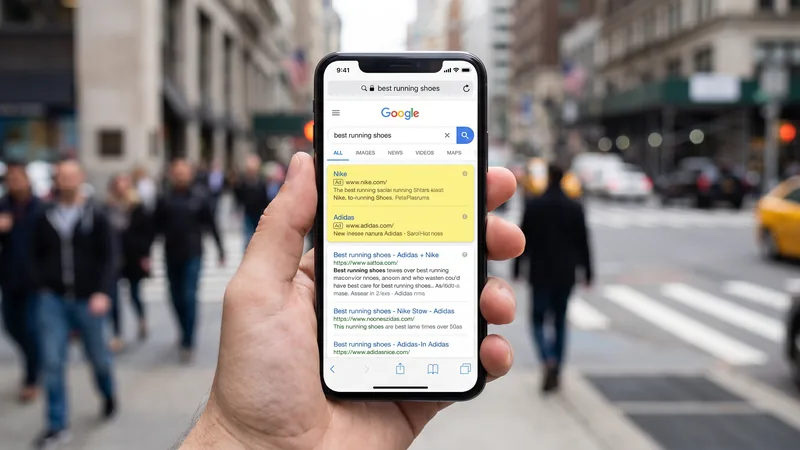
Google has spent the better part of a decade pushing advertisers toward automation: Smart Bidding, Performance Max, automatically applied recommendations, broad match paired with automated bidding. Some of this is genuinely good for advertisers. Some of it is good for Google's ad revenue first and advertiser performance second. Telling the difference is one of the more valuable skills a PPC manager can develop, and it's the difference between accounts that scale efficiently and accounts that quietly bleed budget while the dashboards look fine.
This guide breaks down what automation genuinely handles better than a human, what still needs manual oversight, and how to build a hybrid approach that gets the efficiency benefits without losing control of the account.
None of this is an argument against automation broadly, I run Smart Bidding on the large majority of accounts I manage, and for good reason. It's an argument for being deliberate about which decisions you hand over and which you keep, rather than treating "automation" as a single on/off switch applied uniformly across an entire account.
The Rise of Automation in Google Ads
Manual CPC bidding, once the default for most accounts, is now a minority approach: Google has steadily deprecated or de-emphasized manual controls in favor of Smart Bidding strategies across Search, Shopping, and Performance Max. This shift reflects a genuine technical reality: machine learning models can evaluate far more signals at auction time than a human adjusting bids by keyword ever could.
But automation adoption has outpaced advertiser understanding of what it's actually optimizing toward. An account can look "automated" and modern while quietly optimizing toward the wrong goal, because nobody checked what conversion action was feeding the algorithm.
Google's own incentives are worth naming plainly, not as a conspiracy theory but as a straightforward business reality: automated systems that manage bidding and budget allocation on Google's behalf also tend to make it easier for advertisers to increase spend, and Google's revenue grows when advertisers spend more. That doesn't make automation bad, the tools can still genuinely improve performance per dollar spent, but it does mean advertisers should evaluate every recommendation and automated feature on its own merits, rather than assuming "Google suggested it" is itself a reason to adopt it.
What Smart Bidding Does Well
Smart Bidding strategies: Maximize Conversions, Maximize Conversion Value, Target CPA, Target ROAS: genuinely outperform manual bidding for most accounts with sufficient conversion volume, because they incorporate real-time signals (device, location, audience, time of day, even weather in some cases) at a scale no manual bidder could process.
- Target CPA / Target ROAS work well once an account has stable, sufficient conversion volume and accurate conversion values.
- Maximize Conversions is a reasonable default for newer accounts still building conversion history, though it can chase volume over efficiency if left unchecked.
- Portfolio bid strategies let you apply one automated strategy across multiple campaigns, useful for accounts with many similar, smaller campaigns that individually lack enough data.
Performance Max: Pros, Cons, and When to Use It
| Strengths | Limitations |
|---|---|
| Automatically finds incremental reach across Search, Display, YouTube, Shopping, Maps | Limited visibility into which channel/placement is actually driving results |
| Strong performance when fed high-quality first-party audience and conversion data | Can cannibalize existing Search campaign performance if not managed carefully alongside it |
| Reduces management overhead for smaller teams | Fewer manual levers to pull when something underperforms - less granular control |
My honest take: Performance Max earns its place for accounts with strong first-party data, clear conversion goals, and enough conversion volume to give it a signal to work with. It performs poorly, and can quietly waste budget, in accounts that hand it vague goals and no first-party audience signals to seed it with.
One practical mitigation for the visibility problem: running Performance Max alongside, rather than instead of, a well-structured Search campaign for your core, highest-intent keywords, and monitoring for signs of cannibalization (a drop in Search campaign impression share coinciding with Performance Max growth) rather than assuming the two are cleanly additive. Google's asset group reporting and the new customer acquisition goal setting have improved transparency somewhat over earlier versions, but it still requires more deliberate monitoring than a standard Search campaign to be confident about where results are actually coming from.
Automated Rules and Scripts
Below the level of full Smart Bidding automation, Google Ads' automated rules and custom scripts offer a middle ground. Automating repetitive, well-defined tasks (pausing underperforming keywords past a spend threshold, adjusting bids on a schedule, flagging budget pacing issues) without handing over core strategic decisions to a black-box algorithm.
This layer of automation is underused relative to its value. A well-built script that flags accounts pacing 20% over monthly budget, or that automatically pauses search terms matching a negative keyword pattern, catches problems faster than a weekly manual review ever will, while keeping the actual decision-making transparent and auditable.
The appeal of this middle layer is precisely that it's auditable in a way full Smart Bidding automation isn't. You can read a script's logic line by line and know exactly what conditions trigger what action, a level of transparency that black-box machine learning bidding models don't offer. For teams uncomfortable handing over full bidding control but still wanting to reduce manual workload, building out a library of well-tested automated rules for the genuinely repetitive, well-defined tasks is often a better first step than jumping straight to full Smart Bidding adoption across an entire account.
What to Keep Manual
- Account structure and campaign strategy. No automation tool decides how to segment your services, geography, or audiences: that's a strategic call that shapes everything downstream.
- Conversion action definitions. Deciding what actually counts as a valuable conversion, and at what value, is a business judgment call, not an algorithmic one.
- Search term review. Automated bidding doesn't reliably catch every irrelevant query; a periodic manual pass through search term reports remains one of the highest-value, lowest-effort habits in PPC management.
- Ad copy compliance and claims. Especially in regulated industries, human review of what an ad actually claims is non-negotiable.
- Budget decisions during unusual events. A sudden news event, a competitor exiting the market, or a seasonal anomaly needs human judgment that automated systems, trained on historical patterns, won't anticipate.
Guardrails and Monitoring That Actually Work
Automation without monitoring is how accounts drift quietly off course. Effective guardrails include:
- Weekly review of search terms even on fully automated campaigns.
- Budget pacing alerts (built-in or via scripts) to catch overspend early, before it compounds over a month.
- Quarterly review of conversion action values, to confirm they still reflect actual lead or customer worth as pricing or offers change.
- A standing "what changed" log whenever a bidding strategy or major setting changes, so performance shifts can be traced to a specific cause rather than guessed at later.
Feeding accurate downstream data back into the account - see CRM Integration with Google Ads and Lead Scoring for PPC Campaigns, is itself one of the strongest guardrails available, since it keeps automated bidding anchored to real business outcomes rather than proxy metrics.
A lighter-weight guardrail that's easy to skip but genuinely useful: keeping a simple running log of every automation-related change made to an account, with dates and a one-line rationale. When performance shifts unexpectedly weeks later, this log turns "why did this happen" from a guessing exercise into a quick lookup. It sounds almost too basic to mention, but very few accounts actually maintain this discipline consistently, and it's usually the accounts without one where a performance regression takes the longest to properly diagnose.
Common Automation Mistakes
- Switching bidding strategies too frequently, never letting any single strategy fully stabilize.
- Setting Target CPA or Target ROAS goals based on wishful thinking rather than the account's actual historical performance.
- Applying full automation to an account with too little conversion volume for the algorithm to learn from reliably.
- Assuming "automated" means "hands off" rather than "different kind of oversight required."
A less discussed mistake worth flagging: adopting every new automated feature Google rolls out simply because it's new, rather than evaluating whether it genuinely fits the account's goals and data maturity. Google ships automation features continuously, and the "recommendations" tab inside Google Ads will happily suggest adopting most of them, often framed with an optimization score implying that not adopting them is leaving performance on the table. Some of these recommendations are genuinely useful; others primarily benefit ad spend growth rather than advertiser efficiency. Treating every recommendation with the same scrutiny you'd apply to a new vendor pitch, rather than accepting the optimization score at face value, is a healthy habit worth building.
Building a Hybrid Approach
The most durable approach treats automation as infrastructure, not a replacement for strategy. Let Smart Bidding handle bid-level decisions at auction time, it genuinely does this better than a human. Keep account structure, conversion definitions, budget strategy, and ad compliance as human-owned decisions. Build lightweight automated monitoring (scripts, alerts) to catch problems between manual reviews, rather than relying on either full automation or full manual oversight alone.
For the platform-side detail on how these bidding strategies work mechanically, Google's official Smart Bidding guide is worth reading directly, and pairs well with our broader look at where AI genuinely helps versus where it's overstated in AI in Lead Generation.
The Case for Staying Hands-On, Even With Automation
There's a version of "trust the algorithm" advice that's genuinely good, don't fight Smart Bidding's learning phase with constant manual overrides, don't judge performance on daily noise. There's another version that's really an excuse for disengagement, where "the algorithm handles it" becomes the reason nobody looks at the account for a month. The difference between these two postures usually shows up first in the accounts that quietly plateau: performance that was fine six months ago, still fine-looking on the surface, but slowly drifting away from what the business actually needs as offerings, pricing, or market conditions shift underneath an account nobody is actively watching.
My actual practice: automated systems get a defined check-in cadence just like anything else, weekly for active budget pacing and search terms, monthly for conversion action values and bidding strategy performance, quarterly for whether the whole account structure still matches the business it's serving. Automation reduces how much manual intervention is needed at each of those checkpoints. It doesn't reduce how often someone should be looking.