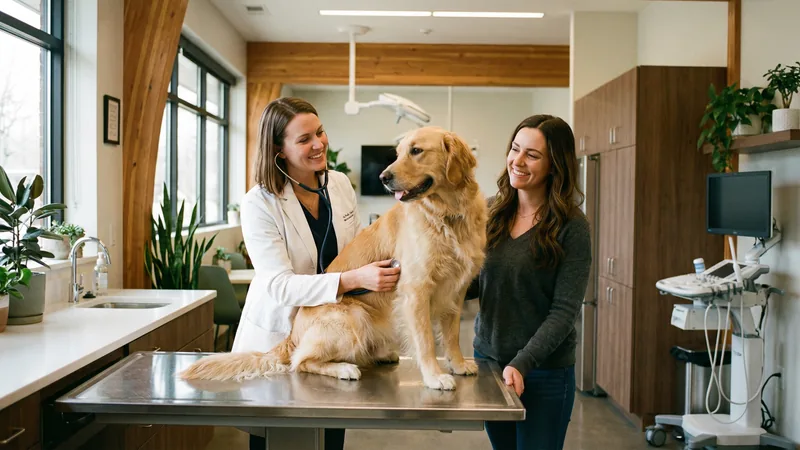
Few purchase decisions carry the emotional weight of choosing who treats a sick or injured pet, and that emotional intensity shapes almost everything about how veterinary PPC should be structured. A search for "emergency vet near me" at 11pm and a search for "puppy vaccination schedule vet near me" on a calm Tuesday afternoon represent two entirely different mental states, and campaigns that don't separate them end up serving compromised messaging to both.
Veterinary marketing also sits in an interesting middle ground between a true medical category and a more typical local service business, the emotional stakes and research depth resemble healthcare marketing for humans, but the advertising platform rules and competitive dynamics look much more like a standard local services vertical. Practices that borrow the best of both, genuine clinical credibility paired with the conversion-focused landing page and offer strategy that works well in other local service categories, tend to outperform practices treating it as purely one or the other.
Why Veterinary Search Traffic Is Unusually High-Intent
Pet owners research veterinary care more thoroughly than almost any other local service category, reading reviews in detail, checking whether a practice handles specific conditions or species, and often calling ahead with questions before ever booking an appointment. This means veterinary PPC traffic, while sometimes more expensive per click than expected for a "medical" category serving animals rather than people, tends to convert at a genuinely high rate once the ad and landing page earn the click, because most searchers have already done real research before reaching for their phone.
It also means the cost of a poor first impression is higher than in many other categories. A pet owner who clicks through expecting warmth and clinical competence, and instead finds a generic, impersonal landing page with no real information about the doctors or the practice's approach to care, is likely to bounce and continue their search elsewhere: the emotional stakes of the decision make this audience less forgiving of generic marketing than a typical local service searcher comparing prices on a routine home repair.
That research-heavy behavior also means review quality and depth matter enormously, a prospective client evaluating two similarly-priced practices will often make the final decision based on which one has more detailed, recent reviews describing how staff treated a specific situation, not just an average star rating.
Emergency vs. Wellness: Two Very Different Searches
Split campaigns clearly along this line rather than running one general "Veterinary Services" campaign:
- Emergency/Urgent Care - injury, sudden illness, poisoning concerns. Highest urgency, needs 24/7 availability messaging if you offer it, or clear after-hours referral information if you don't.
- Wellness/Preventive - vaccinations, annual checkups, dental cleanings. Lower urgency, more price-comparison behavior, good fit for a new-client offer.
- Specific Conditions/Specialty - dermatology, orthopedic issues, senior pet care. Moderate urgency, benefits from condition-specific landing content.
A practice that doesn't offer true 24/7 emergency care should be careful with emergency-tier keywords specifically, bidding on "emergency vet" without being able to actually see that patient immediately creates a poor experience and wastes the click, and is often better handled by clearly stating your after-hours referral partner rather than competing for traffic you can't properly serve.
The New Client Offer Funnel
A discounted or free "new client wellness exam" is one of the most effective conversion tools in veterinary PPC, functioning similarly to an intro offer in the fitness category: it converts a research-stage pet owner into an in-person visit, where the practice's actual quality of care does the real persuading. Offers framed around risk reduction ("Meet Our Vets, First Exam $49" or "New Client Special: Free Nail Trim With Your First Visit") tend to outperform generic percentage discounts, since the goal is getting a new pet owner in the door, not simply competing on price against an established relationship they may already have with another practice.
It's worth thinking about the new client offer as a customer acquisition investment rather than a standalone profit center: a pet's lifetime veterinary spend across years of wellness visits, vaccinations, dental cleanings, and occasional urgent issues typically runs into the thousands of dollars, which makes even a fully free first exam an easy, profitable trade if it reliably converts a meaningful share of visitors into long-term clients.
Keyword and Match Type Strategy
Veterinary keyword lists should distinguish species where relevant ("dog vet near me" vs. "cat vet near me" vs. "exotic pet vet") since some practices specialize and irrelevant species traffic wastes budget, alongside urgency tier (emergency vs. wellness vs. specific condition). Exclude "vet tech jobs," "how to become a veterinarian," "veterinary school," and free/DIY-oriented searches like "how to treat [condition] at home": all common in this category and none representing a bookable appointment.
Ad Copy: Compassion and Credentials Together
Veterinary ad copy performs best when it balances warmth with credibility, "Compassionate Care for Your Best Friend" alone reads as generic, but pairing emotional language with concrete credentials ("Fear Free Certified," "24/7 Emergency Care," "AAHA-Accredited Hospital") gives a pet owner both the emotional reassurance and the practical trust signal they're looking for simultaneously. Specific claims about facility capabilities (in-house lab, digital X-ray, surgical suite) also differentiate a full-service practice from a smaller clinic that would need to refer out for more involved cases.
Google Ads Policy Notes for Veterinary Advertising
Google's advertising policies around healthcare and medicines are generally aimed at human pharmaceutical and medical claims rather than general veterinary services, so most standard veterinary practice advertising isn't heavily restricted the way, say, prescription drug advertising is. That said, be cautious with specific claims around prescription medications, controlled substances, or medical treatment guarantees in ad copy: as with any healthcare-adjacent category, overly specific medical claims can trigger review or disapproval, and it's worth keeping ad copy focused on the practice and its services rather than specific drug names or guaranteed treatment outcomes.
Landing Pages and Online Booking
The single highest-leverage landing page improvement for most veterinary practices is enabling real online appointment booking rather than forcing every visitor to call during business hours. Pet owners researching in the evening or on a lunch break often want to lock in an appointment immediately rather than remembering to call the next day, and a practice that can't capture that intent in the moment loses a meaningful share of otherwise-interested new clients to whichever nearby practice makes booking easiest.
The Review and Reputation Loop
Given how heavily pet owners research before booking, an active, ongoing review generation process matters more here than in almost any other local service category. Requesting reviews shortly after a positive visit, particularly ones involving a successful treatment outcome or a especially caring interaction during a difficult moment (end-of-life care, a scary diagnosis handled well): produces the kind of detailed, emotionally resonant reviews that most influence other pet owners' decisions, far more than a generic "great service, five stars" review does.
Multi-Doctor and Multi-Location Practice Considerations
Larger veterinary practices with multiple doctors or multiple locations face an added wrinkle: prospective clients sometimes have a preference for a specific doctor based on reviews, specialty, or referral, while others simply want the nearest available appointment. Landing pages that let a visitor choose between "book with a specific doctor" and "book the next available appointment" tend to serve both types of searchers better than forcing everyone through a single generic booking flow, and multi-location practices should treat each location as its own campaign with its own geo-targeting radius rather than running one broad campaign across an entire metro area.
For practices building out a specialty service (orthopedic surgery, dermatology, oncology) that draws clients from a wider radius than routine wellness care, it's worth loosening geo-targeting specifically for that specialty campaign while keeping general wellness and emergency campaigns tightly localized: the same pet owner willing to drive 45 minutes for a specialist would never do so for a routine vaccination appointment.
Realistic Budget Benchmarks for Veterinary PPC
Most single-location veterinary practices see solid results running $1,500-$4,000/month on Google Ads, with cost-per-click on wellness and general practice keywords typically in the $3-8 range and emergency/urgent-care keywords running somewhat higher due to competitive urgency-driven bidding. Specialty and referral-based services often see lower search volume but can support a higher cost-per-click given the higher average case value involved.
| Practice Type | Typical Monthly Budget | Primary Campaign Focus |
|---|---|---|
| Single-location general practice | $1,500-$4,000 | Wellness + new client offer, tight local radius |
| Practice with emergency/urgent care | $2,500-$6,000 | Split emergency and wellness campaigns |
| Multi-doctor / specialty practice | $3,000-$8,000+ | Location-specific wellness plus wider-radius specialty campaigns |
Common Mistakes in Veterinary PPC
- Bidding on emergency keywords without true 24/7 capability, wasting clicks and creating a poor experience for genuinely urgent searchers.
- One blended campaign for emergency, wellness, and specialty care instead of segmented campaigns matching each search's urgency level.
- No online booking, forcing every interested pet owner to call during limited business hours.
- Generic ad copy that leans entirely on emotional warmth without concrete credentials or facility capabilities.
- Inconsistent review generation, missing the category's unusually strong reliance on detailed, recent reviews in the decision process.
Veterinary PPC rewards practices that respect how emotionally significant and research-heavy this decision is for pet owners. Segment by urgency, make that crucial new-client first visit as easy to book as possible, and keep the review engine running consistently: that combination converts far better than simply bidding aggressively on "vet near me" and hoping the practice's actual quality of care carries the rest.
If you're a practice manager without dedicated marketing staff, start with the two changes that require the least ongoing management but produce the most immediate lift: split emergency and wellness into separate campaigns, and get a genuine new-client offer live with online booking enabled. Both can typically be implemented within a week and will noticeably improve conversion rate before any deeper keyword or bidding optimization is even necessary.
Frequently Asked Questions
Related reading: Mortgage Broker Lead Generation and PPC, Orthodontist and Cosmetic Dentistry Ads and Why Personal Injury Google Ads Cost $50 to $150 a Click, and What That Changes.