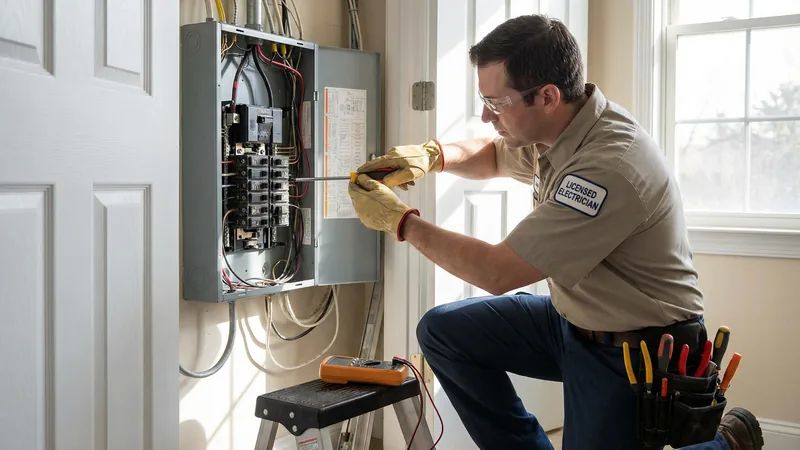
Electrical work sits at an interesting intersection: it's urgent enough to justify aggressive local advertising (nobody waits three days to fix a dead circuit), but skilled and safety-sensitive enough that homeowners genuinely care about licensing and reputation before they'll let someone touch their electrical panel. That combination, high urgency plus high trust requirements, makes electricians one of the best-suited trades for running Local Services Ads and Search Ads together rather than choosing one over the other.
Why Electricians Need Both LSA and Search Ads
Local Services Ads and Search Ads solve different problems, and electricians are a category where both problems exist simultaneously. LSAs put you above the map pack with a Google Guaranteed badge, charge per lead instead of per click, and lean on Google's own vetting (license and insurance verification, background checks) to signal trust automatically: which matters enormously for a service where customers are inviting someone to work on live electrical systems in their home.
Search Ads, meanwhile, give you control that LSAs don't: you choose the exact keywords, write your own ad copy, and can send traffic to a landing page built around a specific service (panel upgrades, EV charger installs, generator installation) rather than a generic profile card. Running both means you capture the "just book someone reputable" searcher through LSA and the more specific, higher-value searcher through Search: without leaving either channel's traffic on the table.
Setting Up Local Services Ads for Electrical Work
Getting approved for Local Services Ads as an electrician requires passing Google's license and insurance verification and, in most markets, a background check: budget 1-3 weeks for this process before your ads can go live, and start it well before you need the leads flowing. Once approved, your weekly budget controls how many leads you receive, and you're charged per qualified lead rather than per click, which removes the risk of paying for clicks that never convert into a phone call. Respond to leads within minutes where possible, LSA lead quality and your ranking in the ad unit are both influenced by responsiveness, and a slow response effectively wastes money you already spent to acquire that lead.
Structuring Search Ads Around Electrical Services
Rather than one "Electrician" campaign, structure Search Ads around service tiers that reflect real differences in urgency and ticket size:
- Emergency/Repair: outlet not working, breaker tripping, power outage in part of the house. High urgency, moderate ticket, needs fast response messaging.
- Panel Upgrades: higher ticket ($1,500-$4,000+), more research-driven, benefits from a dedicated landing page explaining the process.
- EV Charger Installation: growing category, distinct keyword set, often bundled with panel upgrade needs.
- Lighting & Wiring Projects: remodels, new construction, recessed lighting - longer sales cycle, design-oriented.
This mirrors the segmentation approach that works well for HVAC PPC campaigns, separating emergency/urgent demand from planned, higher-consideration project work so each gets the bidding logic and messaging it needs.
Keyword Tiers: Emergency vs. Planned Electrical Work
| Tier | Example Keywords | Strategy |
|---|---|---|
| Emergency | "emergency electrician near me," "power outage electrician," "breaker keeps tripping" | Bid aggressively, use call-focused ad extensions, 24/7 ad scheduling if available |
| Planned/Project | "electrical panel upgrade cost," "EV charger installation," "recessed lighting installer" | Route to dedicated landing pages, moderate bids, nurture longer research phase |
| Research/Informational | "how much does an electrician cost," "do I need a licensed electrician" | Low bids or exclude; better served by content than paid clicks |
Negative keywords should exclude "electrician jobs," "electrician salary," "how to become an electrician," and DIY-focused searches like "how to wire an outlet myself": all common in this category and none representing a hireable customer.
Ad Copy: Licensing, Safety, and Trust Signals
Because electrical work carries real safety stakes, ad copy that leads with licensing and insurance credentials consistently outperforms copy that leads with price or speed alone. "Licensed & Insured Master Electrician" and "24/7 Emergency Response" in the headline do more work than "Affordable Electrical Services." Where you have them, specific credentials (years in business, number of jobs completed, manufacturer certifications for EV chargers or generators) make strong secondary headlines.
Reviews matter as much as credentials here, arguably more. A prospective customer choosing between two licensed, insured electricians will almost always default to the one with more recent, more detailed reviews: and mentioning review count or rating directly in ad copy ("4.9 Stars, 300+ Local Reviews") is one of the simplest, highest-leverage additions you can make to an underperforming ad. Sitelink extensions pointing to a dedicated reviews or testimonials page give hesitant clickers one more trust signal before they ever pick up the phone.
The EV Charger Installation Opportunity
EV charger installation has become a meaningful, growing revenue line for electricians as home EV adoption increases, and it's an underserved niche in paid search relative to demand: search volume for terms like "EV charger installation near me" has grown steadily, but relatively few electrical contractors run a dedicated campaign for it. A standalone campaign with its own landing page (addressing permit requirements, panel capacity questions, and rebate eligibility, which vary significantly by location and utility) captures a higher-ticket, less price-sensitive customer than general electrical repair traffic, and typically faces lower cost-per-click competition than saturated "electrician near me" terms.
Why Call Tracking Is Non-Negotiable
Electrical work, like most urgent home services, converts predominantly by phone. Without call tracking and recording, you're flying blind on which keywords and ads are actually producing booked jobs versus which are producing tire-kicker calls that never convert: and Smart Bidding can only optimize toward conversion signals it can actually see. Set up dynamic number insertion at minimum, and ideally integrate call outcomes back into Google Ads as offline conversions so bidding can learn from which calls turned into real jobs, not just which calls happened.
Budgeting for an Electrician PPC Account
Most local electrical contractors run effectively on $2,000-$6,000/month combined across LSA and Search, depending on market size and competitiveness. Emergency/repair keywords tend to have the highest CPCs due to urgency-driven competition, while planned-project keywords (panel upgrades, EV chargers) often have more headroom for a healthy ROI because fewer competitors bid specifically on them. Split budget with emergency work as your volume driver and planned-project work as your margin driver, and revisit the split quarterly as EV charger demand in particular continues to grow.
A common starting allocation for a single-truck or small crew operation is roughly 50% to LSA (which naturally caps itself through the weekly lead budget you set), 35% to emergency/repair Search Ads, and 15% to planned-project Search Ads. As the business grows and crew capacity increases, that ratio typically shifts toward planned-project work, since it supports higher average ticket sizes and a more predictable, less reactive scheduling calendar than pure emergency response. Track cost-per-booked-job (not just cost-per-lead) by campaign so you can make this reallocation based on actual profitability rather than raw lead volume.
Landing Pages for Panel Upgrades and Specialty Work
Higher-ticket, more researched services deserve landing pages that do more selling than a generic "Contact Us" form. A panel upgrade page should explain, in plain language, why a homeowner might need one (adding an EV charger, a hot tub, or renovating a kitchen with modern appliances all commonly require it), roughly what the process involves, typical price ranges, and how long the work takes: homeowners considering a $2,000-$4,000 investment want more context before calling than someone with a dead outlet does.
The same logic applies to EV charger and generator installation pages: address the questions a homeowner is actually Googling separately from your service page (permit requirements, whether their existing panel has capacity, rebate or tax credit eligibility) rather than making them call just to get basic information. Contractors who build out this kind of specialty-service content consistently see better landing page conversion rates and lower bounce rates on their higher-value campaigns, because the page answers the objections that would otherwise require a phone call to resolve.
Seasonal and Regional Demand Patterns
Electrical demand has real seasonal texture that's worth building into your campaign calendar. Storm season and extreme heat/cold snaps drive spikes in emergency and generator-related searches, generator installation interest in particular climbs sharply after major outages make local news, and campaigns that can flex budget upward quickly during those windows capture demand that flatter, unresponsive budgets miss. Panel upgrade and EV charger interest tends to be steadier year-round but sees a modest bump in spring and early summer alongside broader home renovation activity, and a smaller bump around major holiday sales periods when EV purchases themselves spike.
Regional differences matter too, utility rebate programs for EV chargers and panel upgrades vary significantly by state and even by utility provider, and mentioning locally-relevant rebate programs in ad copy or on the landing page is a differentiator that most competitors' generic national ad copy misses entirely.
Common Mistakes in Electrician PPC Campaigns
- Running LSA or Search Ads, but not both, leaving either broad-reach leads or high-ticket specialty leads on the table.
- No call tracking, making it impossible to know which campaigns actually produce booked jobs.
- Slow LSA lead response times, which hurts both conversion rate and Google's ranking of your listing.
- Treating EV charger installation as an afterthought rather than a dedicated, growing campaign.
- Generic ad copy that doesn't lead with licensing and safety credentials, which matter more in this trade than almost any other.
Electricians who run a properly structured LSA-plus-Search strategy, backed by real call tracking, consistently outperform competitors running just one channel or one blended campaign. Start with LSA to build a Google Guaranteed presence, layer in Search Ads segmented by urgency and ticket size, and treat EV charger installation as its own growth line rather than folding it into general electrical services.
If you're a solo operator or small crew just getting started with paid search, resist the urge to launch everything at once. Get LSA approved and running first since it requires the least ongoing management and self-limits spend through the weekly lead cap, then layer in a single Search campaign for your highest-margin planned-project service once you have a baseline of call volume and a working sense of which jobs are actually worth pursuing aggressively. Expanding methodically, one properly structured campaign at a time, produces a cleaner account and clearer data than launching four campaigns simultaneously and trying to untangle performance across all of them at once.
The same urgency-tiered structure shows up across emergency home services. See how it plays out in a category with even higher CPCs in the PPC for plumbers guide.
The plumbing equivalent, run as a managed engagement rather than a guide, sits on the Google Ads for plumbers page.